Grace Periods Are Not Accidents: How to Read Late Submission Policies as Built-In Academic Insurance

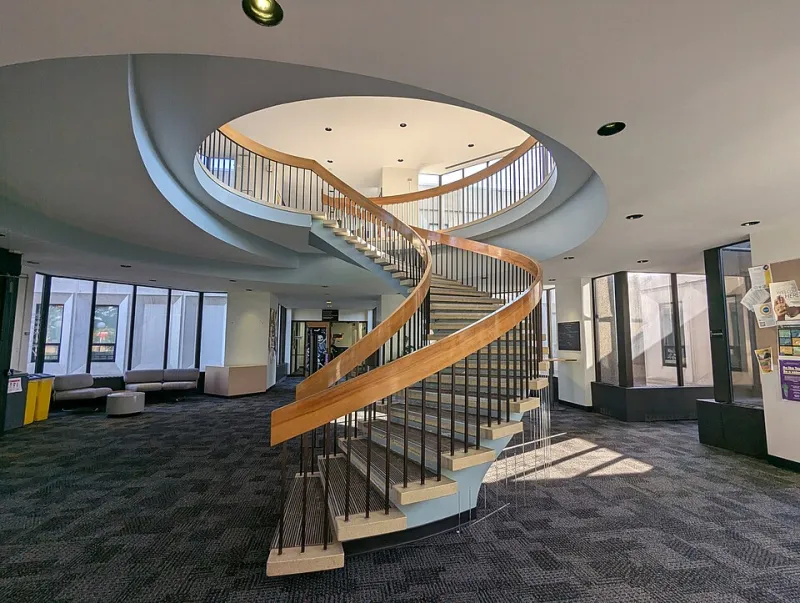
Photo by Photo by Maxim Tolchinskiy on Unsplash on Unsplash
When students scan a syllabus at the start of a semester, the late assignment policy rarely receives much attention. It sits near the bottom of the document, written in cautionary language, and most students mentally file it under "consequences to avoid." That interpretation, while understandable, misses the larger picture entirely.
Late submission policies are not simply punitive frameworks. In many cases, they represent deliberate design choices made by instructors and departments to accommodate the reality that students are human beings navigating complex lives. Understanding how these provisions actually function — and when engaging them is entirely appropriate — is one of the more underutilized skills in a student's academic toolkit.
The Architecture Behind a Late Policy
Not all late policies are built the same way, and that distinction matters enormously. The three most common structures you will encounter at American colleges and universities are the flat penalty model, the sliding deduction model, and the defined submission window.
Under a flat penalty model, a student receives a fixed grade reduction for any late submission regardless of how late the work arrives — often ten or twenty points deducted from the final score. This structure implicitly acknowledges that late work still has value and that the instructor is willing to accept it under a known cost.
The sliding deduction model reduces a grade incrementally over time — perhaps ten percent per day or per class period missed. The important insight here is that the policy encodes a deadline range, not a single hard cutoff. Submitting one day late versus five days late carries meaningfully different consequences, and that difference is by design.
Finally, the defined submission window sets a specific period — often 48 to 72 hours — during which late work is accepted at a penalty, after which the assignment is closed entirely. This model is actually quite generous within its window, and students who miss it by hours rather than days frequently fail to realize they still have a viable path to partial credit.
Why Professors Build Flexibility In
Instructors at most U.S. institutions are aware — often from hard experience — that emergencies happen. Illness, family crises, housing instability, mental health episodes, and administrative delays do not respect assignment calendars. A professor who builds a structured late policy into their syllabus is, in many cases, preemptively creating a mechanism to handle these situations without requiring individual negotiation for every student who encounters difficulty.
This does not mean the policy is an invitation to deprioritize deadlines. It means the policy is a documented agreement about how the course will handle imperfection. Treating it as such — rather than as a wall — is the more accurate and productive framing.
Reading Your Syllabus for Hidden Grace
When reviewing a syllabus, look for language that specifies conditions rather than blanket prohibitions. Phrases such as "late work will not be accepted without prior communication" or "extensions may be granted at the instructor's discretion for documented emergencies" are not boilerplate. They are functional clauses that describe a real pathway.
Note particularly whether the policy distinguishes between different types of assignments. Many syllabi apply stricter late rules to in-class exams and participation grades while maintaining more flexible standards for written submissions or low-stakes assignments. That asymmetry is intentional and worth mapping before the semester accelerates.
Also pay attention to whether the policy references the institution's broader academic policies. Many colleges maintain official make-up provisions tied to documented absences, medical withdrawals, or Title IX accommodations. A syllabus late policy that conflicts with institutional policy is, legally and procedurally, superseded by the institution. That is a meaningful protection that most students never think to invoke.
Ethical Engagement: What This Looks Like in Practice
Using a late policy appropriately is not the same as gaming the system. The ethical framework here is straightforward: if the policy permits late submission under specific conditions, and those conditions apply to your situation, submitting late within the defined parameters is exactly what the policy is designed to accommodate.
When a genuine crisis arises — illness, a family emergency, a documentation delay from the registrar's office — the appropriate response is proactive communication combined with a clear understanding of what your syllabus actually permits. Contact your professor before the deadline if at all possible. Reference the specific language in the syllabus. Provide whatever documentation the policy or the institution requires. Then submit the work as promptly as your circumstances allow.
This approach accomplishes several things simultaneously. It demonstrates academic responsibility even in a difficult moment. It creates a documented record of the communication. And it positions you as a student engaging with the course's policies in good faith rather than attempting to circumvent them.
When the Policy Runs Out
There are situations in which the late submission window has closed and no institutional exception applies. In those cases, the conversation shifts from policy interpretation to direct advocacy — and that is a different skill set entirely. What matters at this stage is not the syllabus language but the relationship you have built with the instructor and the quality of the documentation you can provide.
Students who have been communicative throughout the semester, who have attended office hours, and who have demonstrated consistent engagement with the course are in a substantially better position to request an accommodation outside the standard policy than students who surface only at the moment of crisis.
This is one of the less obvious arguments for consistent faculty communication. It is not merely about learning the material. It is about building the relational capital that creates flexibility when the documented provisions are no longer sufficient.
A Final Reframe
The late assignment policy in your syllabus is a contract term, not a threat. Like any contract, its value lies in understanding what it actually says rather than what you assume it says. Students who take the time to read these provisions carefully, who understand the structural logic behind them, and who engage with them honestly when circumstances require it are not bending rules — they are exercising exactly the kind of informed academic agency that higher education is designed to cultivate.