What Happens When You Actually Show Up: The Strategic Case for Using Professor Office Hours as an Academic Intelligence Tool
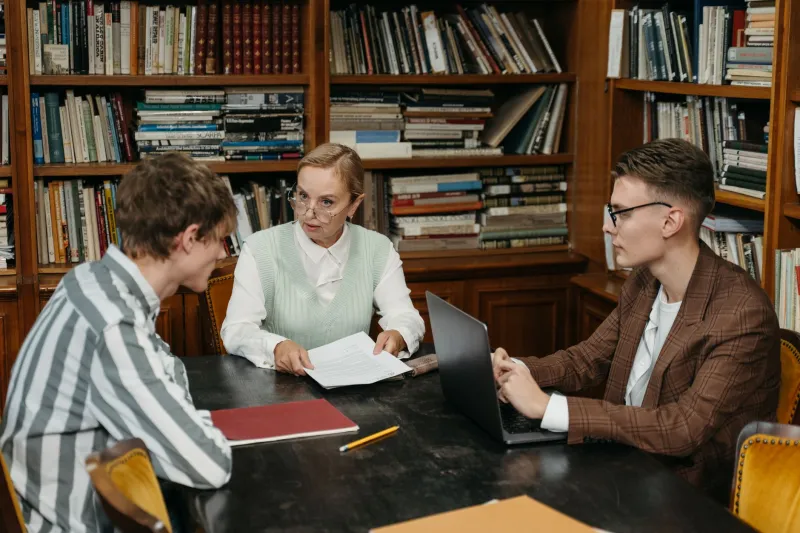
Walk into any undergraduate course on the first day of the semester, and you will hear the same announcement: office hours are held on Tuesday and Thursday from two to four, or by appointment. The professor will say it. It will appear in the syllabus. And then, for the overwhelming majority of students, it will be promptly forgotten — until panic sets in around week twelve.
This is a significant miscalculation.
Office hours are not a remedial service. They are not reserved for students who are struggling, confused, or desperate for extra credit. When approached with intention and preparation, these sessions function as something far more valuable: a structured opportunity to gather information, build professional relationships, and access a layer of academic flexibility that most of your classmates will never know exists.
The Unwritten Dimension of Every Course Policy
Every syllabus contains two versions of a course: the written one and the one that exists at the professor's discretion. Attendance policies often have more flexibility than they appear to on paper. Late submission penalties are sometimes negotiable for students who have demonstrated consistent engagement. Assignment parameters — the scope of a research paper, the format of a final project — can occasionally be adjusted when a student presents a compelling academic rationale.
None of this is advertised. It cannot be. Publicly broadcasting that policies are flexible would undermine the structure that keeps a course running. But that flexibility frequently exists, and the students who discover it are almost always the ones who showed up to office hours early in the semester — not to ask for exceptions, but simply to talk about the course.
The distinction matters. Professors respond very differently to a student who arrives in week two with genuine curiosity about the curriculum versus a student who appears in week fourteen requesting a favor. The groundwork you lay in those early conversations shapes how a professor perceives your academic seriousness — and that perception influences decisions made on your behalf throughout the semester.
Reframing the Purpose of the Visit
The most effective office hours visits are not help sessions. They are intelligence-gathering conversations.
Consider the kinds of questions that yield the most useful information. Rather than asking whether you can turn in an assignment late, ask how the professor weighs different components of the course when evaluating overall performance. Rather than requesting extra credit, ask whether there are supplementary readings or projects that students have pursued in the past to deepen their understanding of a particular topic. Rather than seeking reassurance about your grade, ask what distinguishes the work of students who perform at the highest level in this course.
These questions accomplish multiple things simultaneously. They signal intellectual engagement. They invite the professor to speak candidly about course dynamics. And they frequently surface information that is genuinely difficult to obtain any other way — including the existence of optional enrichment opportunities, flexible submission pathways for exceptional circumstances, or research projects the professor is actively developing.
The Research Opportunity Most Students Never Find
At research universities and liberal arts colleges across the United States, faculty members are almost always engaged in scholarly work that extends well beyond the classroom. Undergraduate research assistantships, co-authorship opportunities, and independent study credits are among the most transformative experiences available to college students — and they are disproportionately accessed through office hours relationships.
Professors rarely post open calls for research collaborators. They extend those invitations to students they already know and trust. That trust is built incrementally, through repeated low-stakes interactions that demonstrate a student's curiosity, reliability, and capacity for independent thinking.
If you are interested in graduate school, academic publishing, or any field where scholarly credentials carry weight, the path frequently runs through a faculty member's office — not through a formal application process, but through a conversation that begins with something as simple as a follow-up question about a lecture topic that genuinely interested you.
Timing Is a Strategic Variable
When you attend office hours is nearly as important as whether you attend at all. The first two weeks of a semester represent a window of low competition and high receptivity. Professors are not yet overwhelmed by grading cycles, and students who appear during this period are noticed precisely because so few others do.
Mid-semester visits, scheduled around the time of major assignments rather than after them, signal that you are approaching the course proactively rather than reactively. End-of-semester visits, while sometimes necessary, carry a different weight — they are harder to distinguish from the grade-related appeals that consume much of a professor's final weeks.
Building a pattern of moderate, consistent engagement across a full semester is the approach that yields the most durable professional relationship. Two or three well-timed, substantive conversations will outperform a single extended meeting held the week before finals.
Preparing for the Conversation
Arriving unprepared to office hours is a missed opportunity. Before each visit, identify one or two specific points from recent lectures or course readings that you found genuinely interesting or unresolved. Bring a question that could not be answered by re-reading the syllabus or searching the course portal. If the professor has published research, a brief familiarity with their work — even at a surface level — provides natural conversational entry points and communicates that you see them as a scholar, not merely as an evaluator.
Keep your visits focused and respectful of the professor's time. Twenty minutes of purposeful conversation is more valuable than an hour of unfocused back-and-forth. Close each visit by expressing appreciation and, where appropriate, indicating that you may return with further questions as the semester progresses. This signals continuity and keeps the relationship active without overstaying your welcome.
The Compounding Return on Engagement
The students who use office hours strategically rarely experience a single dramatic breakthrough. Instead, they accumulate a series of small advantages — a clearer understanding of what the professor values in written work, awareness of an optional seminar that counts toward course participation, an early introduction to a research project that eventually becomes a summer position.
These advantages compound. A stronger letter of recommendation. A research line on a graduate school application. A professional reference who can speak to your intellectual character rather than simply confirming your enrollment.
None of this is available to the student who treats office hours as an emergency service. All of it is available to the student who treats them as a scheduled, strategic investment in their academic future.
The door is open. The question is whether you are prepared to walk through it with a plan.